March 24, 2026
Designing a deck is about more than adding outdoor space — it’s about creating a seamless connection between your home and the natural beauty surrounding it. Whether you have a waterfront property, a wooded backyard, or a scenic open landscape, the right design choices can enhance your view while improving functionality and comfort. Working with experienced deck designers ensures that every element of your project is thoughtfully planned to highlight your surroundings and make the most of your outdoor living space.
Evaluating Your Backyard’s Natural Focal Points
The first step in designing a deck that maximizes your backyard views is identifying what you want to showcase. Every property has unique features that can serve as focal points, whether it’s a lake, garden, tree line, or sunset view. Professional deck designers begin by evaluating sightlines from different areas of your home and yard.
This helps determine the ideal placement and orientation of your deck. Instead of simply attaching a structure to the back of your home, the goal is to position it where the view becomes the centerpiece. By understanding how you naturally move through your space and where your eyes are drawn, designers can create a layout that enhances those perspectives while maintaining a cohesive flow between indoor and outdoor areas.
Choosing the Right Deck Layout and Elevation
The layout and height of your deck play a major role in how well it captures your backyard views. A poorly positioned deck can block sightlines, while a well-planned design can open up the entire space. Experienced deck designers consider elevation carefully, especially on sloped properties. Multi-level decks, for example, can provide different vantage points and create designated areas for dining, lounging, and entertaining without compromising the view.
According to Lawn Love, the typical American home spans roughly 2,480 square feet, while most decks fall in the range of about 300 to 400 square feet. This size difference makes it even more important to use deck space strategically, ensuring every square foot contributes to both function and visual appeal. Thoughtful layouts, such as angled platforms or wraparound designs, can also help capture wider views and make your outdoor space feel larger than it actually is.
Selecting Materials That Complement the Environment
The materials you choose for your deck can either enhance or distract from your backyard views. Natural tones and textures often work best for blending the structure into its surroundings. Skilled deck designers guide homeowners through material selection to ensure durability, aesthetics, and performance. Options such as composite decking, natural wood, and PVC each offer unique benefits depending on your climate and maintenance preferences.
Color is another important factor. Lighter shades can reflect sunlight and create an open, airy feel, while darker tones can add contrast and frame the view. The key is to choose materials that complement your home’s exterior and the natural landscape without overpowering them. By selecting the right materials, you create a cohesive design that enhances your backyard rather than competing with it.
Incorporating Railing Systems That Preserve Sightlines
Railings are an essential safety feature, but they don’t have to obstruct your view. Modern railing systems are designed to provide protection while maintaining clear sightlines. These designs allow you to enjoy unobstructed views while still meeting safety requirements. The placement and height of railings also matter. Strategic design can ensure that seated and standing views remain clear, making your deck more enjoyable from every angle. Choosing the right railing system is a key step in balancing safety with aesthetics, especially when your goal is to highlight your backyard’s natural beauty.
Adding Pergolas and Shade Structures Without Blocking Views
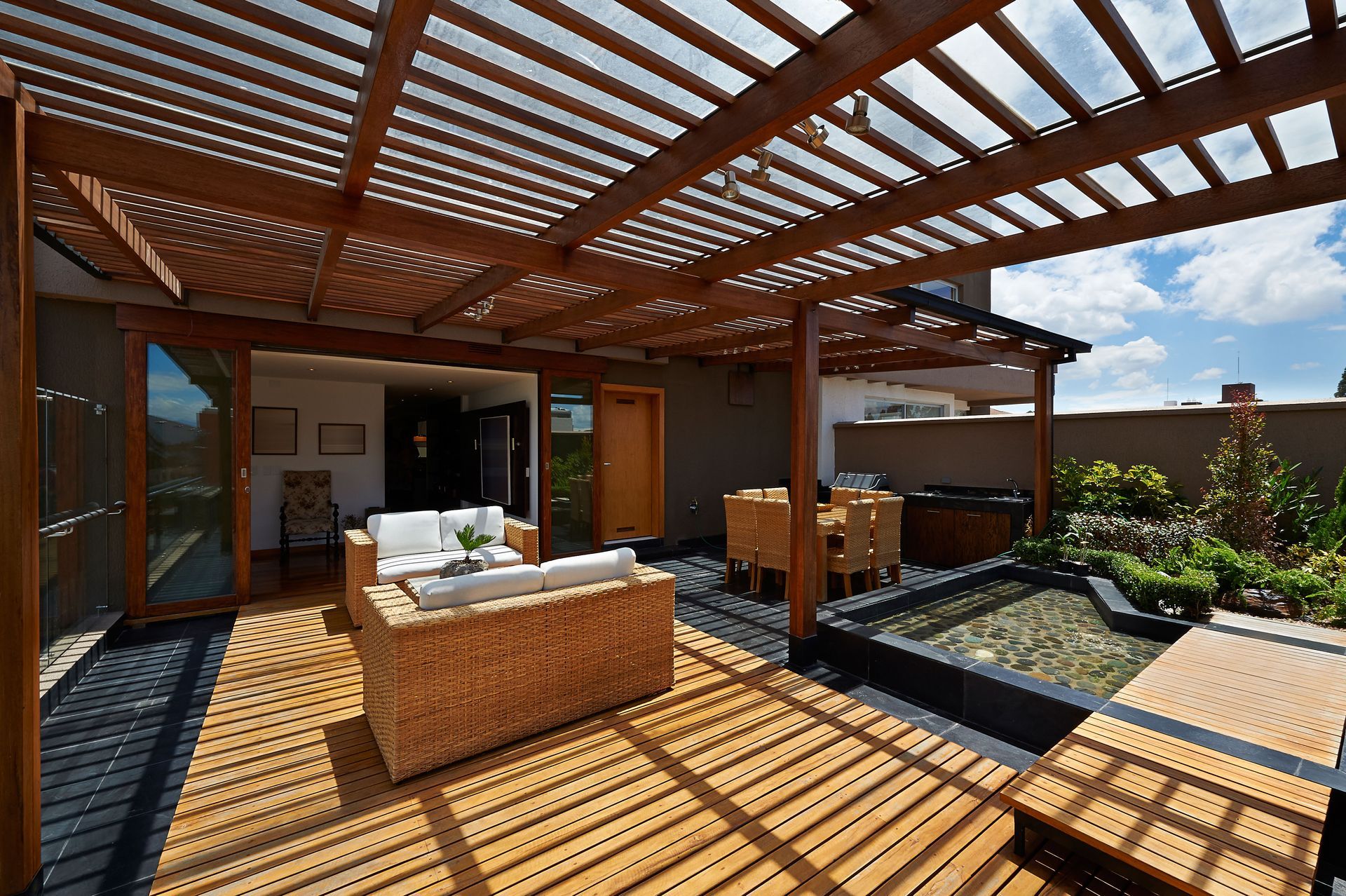
Shade is an important element of any outdoor space, but it needs to be incorporated carefully to avoid interfering with your view. Pergolas and other shade structures can provide comfort while still maintaining an open feel. Experienced deck designers know how to position these features to maximize both shade and visibility. For example, a pergola can be placed over a seating area while leaving the main viewing direction unobstructed.
Adjustable shade options, such as retractable canopies or slatted roofs, offer additional flexibility. These features allow you to control sunlight and shade throughout the day without permanently blocking your view. When designed correctly, shade structures enhance usability without compromising the visual appeal of your deck.
Designing Built-In Features for Function and Flow
Built-in elements can improve both the functionality and aesthetics of your deck. Features such as seating, storage, and planters help keep the space organized while maintaining a clean, streamlined look. Skilled deck designers often incorporate built-in seating along the perimeter of the deck, which helps define the space without adding bulky furniture that could obstruct views. Storage solutions can also be integrated discreetly, keeping clutter out of sight.
Outdoor kitchens are another popular addition, especially for homeowners who enjoy entertaining. By positioning these features thoughtfully, designers ensure they enhance the overall layout without taking attention away from the surrounding scenery. Well-designed built-ins create a more cohesive and efficient space, allowing you to fully enjoy your deck without distractions.
Enhancing Ambiance With Lighting and Electrical Features
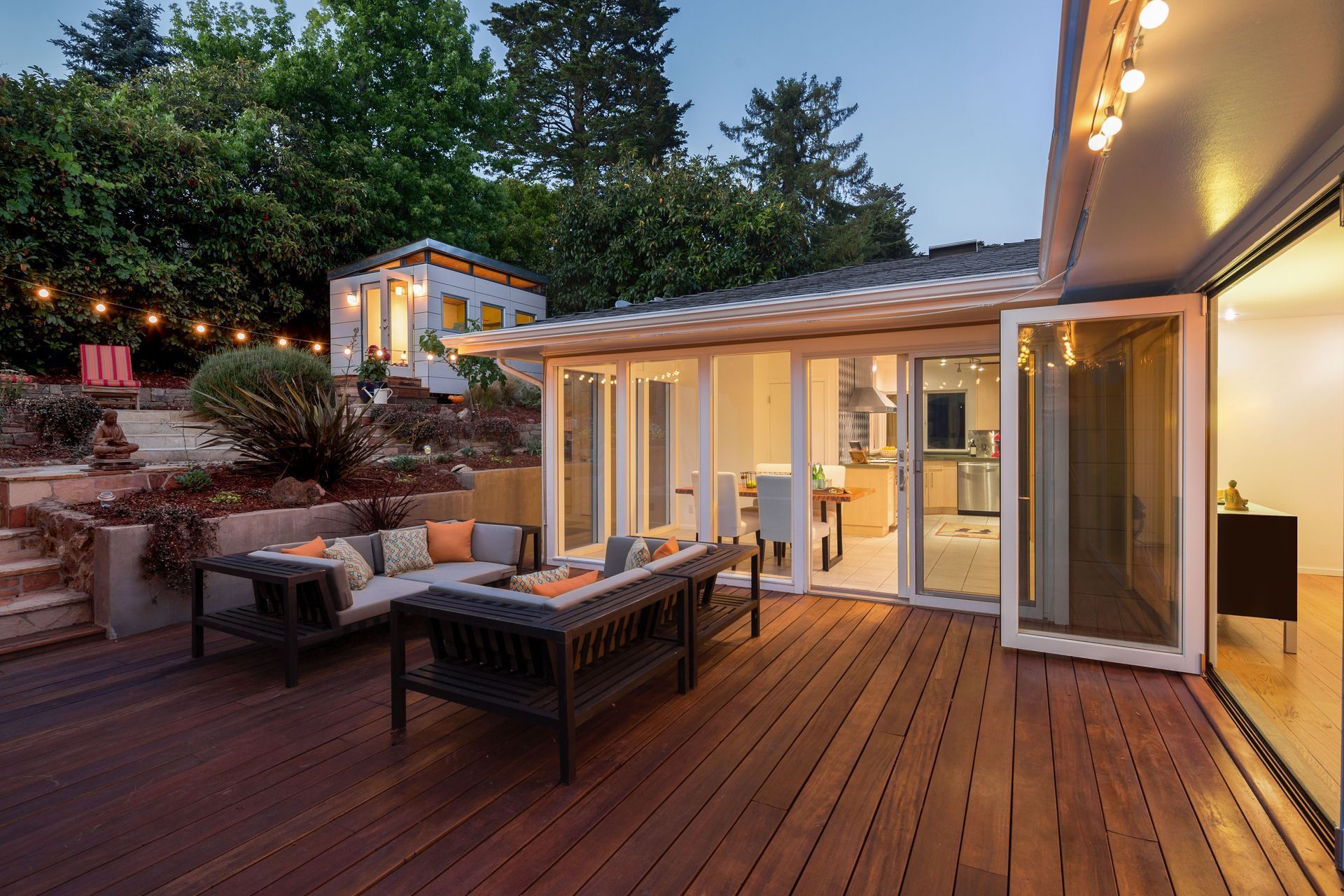
Lighting plays a crucial role in extending the usability of your deck into the evening hours. The right lighting design can highlight architectural features, improve safety, and create a welcoming atmosphere. Professional deck designers incorporate a variety of lighting options, including recessed lights, post cap lights, and under-rail illumination. These subtle additions enhance visibility without overwhelming the space.
Electrical features, such as outlets and integrated sound systems, can also improve convenience and functionality. With proper planning, these elements can be seamlessly integrated into the design without detracting from the overall aesthetic. Thoughtful lighting design ensures your deck remains a comfortable and inviting space at any time of day.
Creating a Seamless Indoor-Outdoor Connection
A well-designed deck should feel like a natural extension of your home. Creating a smooth transition between indoor and outdoor spaces enhances both functionality and visual appeal. Professional deck designers focus on aligning doorways, flooring, and sightlines to create a cohesive flow. Large sliding or folding doors can open up your home to the deck, making the outdoor space feel like part of your living area.
Consistency in design elements, such as color schemes and materials, also helps unify the spaces. This approach not only improves aesthetics but also makes your deck more inviting and accessible. When your indoor and outdoor areas work together, the overall experience of your home is greatly enhanced.
Planning for Long-Term Enjoyment and Value
Designing a deck that maximizes your backyard views is an investment in both your lifestyle and your property value. Thoughtful planning ensures that your deck remains functional, attractive, and enjoyable for years to come. Working with experienced deck designers allows you to consider factors such as future needs, maintenance requirements, and potential upgrades. This forward-thinking approach helps you create a space that adapts to your lifestyle over time.
A well-designed deck not only enhances your daily living experience but also adds lasting value to your home, making it a worthwhile investment. If you’re ready to create a deck that highlights your backyard’s natural beauty while providing comfort and functionality, professional guidance makes all the difference. From custom layouts to material selection and built-in features, every detail plays a role in achieving the perfect design.
Partner with Designer Decks & Docks Inc for experienced deck designers who specialize in custom deck design and construction. Our team can help you bring your vision to life while maximizing your backyard views and outdoor living potential.